A popular destination is also a place where people live, work, commute, shop, and meet friends. Visiting thoughtfully means noticing how your ordinary decisions affect those routines. You do not need to become an expert in every local custom before arriving, but you can prepare, pay attention, and adjust when a place works differently from what you expected.
Considerate travel begins with the scale of your own plans. A crowded viewpoint, a narrow residential street, and a busy train platform require different behavior. Treat official instructions and requests from staff as part of the experience rather than an obstacle to the photograph you wanted. The destination does not stop functioning for everyone else when your holiday begins.
Learn the rules that belong to the place
Before visiting a site, check its official information about access, reservations, photography, clothing, bags, or restricted areas. Avoid assuming that an image posted online shows what is currently permitted. Rules may reflect conservation, religious practice, residents' privacy, or operational needs. If instructions seem unclear, ask the venue or an appropriate staff member instead of relying on what another visitor is doing.
Learn a few basic expressions where useful: a greeting, thank you, excuse me, and a way to ask whether something is allowed. You do not need flawless pronunciation to show an effort. Be patient when communication takes time. If someone cannot help in your preferred language, try a simpler question, written information, or another appropriate source rather than becoming louder or treating the difference as a service failure.
Give people room to move
When stopping to consult a map, gather companions to one side instead of blocking an entrance or pavement. On public transport, follow the operator's instructions about boarding, luggage, priority seating, and designated spaces. Keep your group together where practical, but do not assume everyone else must wait while you reorganize in the busiest part of a station.
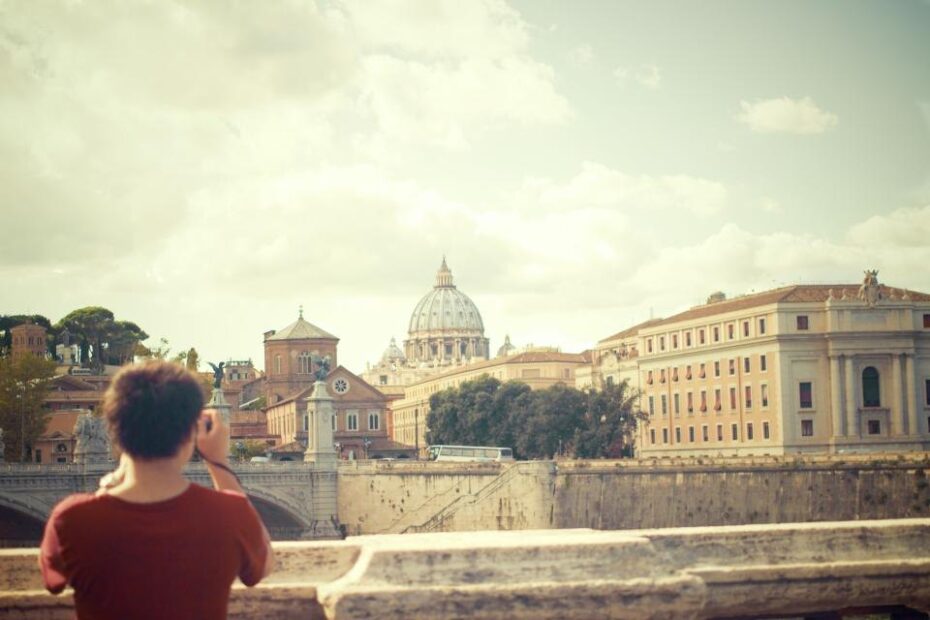
Photographs are an easy moment to forget the surroundings. Before setting up, check whether you are obstructing a doorway, a business, a path, or another person's access. Take the picture and move on when space is limited. A beautiful location can be enjoyed without occupying its best view indefinitely or expecting strangers to disappear from a public place for your entire visit.
Respect privacy beyond the obvious
A charming building may be someone's home rather than a visitor attraction. Avoid entering private courtyards, leaning through windows, opening gates, or treating residents as part of the scenery. If you want to photograph an identifiable person in a personal setting, ask appropriately and respect a refusal. Different legal rules may apply, but basic consideration does not require finding the minimum that is technically allowed.
Think before posting an exact location for a place that is not set up for visitors. A quiet residential corner may not have the capacity to accommodate attention from a large audience. You can share the memory without providing an invitation to enter private property or ignore restrictions. If a host or community asks visitors not to publicize a sensitive location, take that request seriously.
Make outdoor visits fit the setting
For parks and natural areas, use the area's own guidance about routes, closures, wildlife, waste, and equipment. The National Park Service's Leave No Trace overview emphasizes minimizing the effects of recreation. Specific practices depend on the landscape and local rules, so avoid applying a generic tip where the destination requires something different. A marked closure remains relevant even if a path looks passable.
Keep a small place in your day bag for your own waste until you can dispose of it appropriately. Avoid taking natural objects or disturbing wildlife to improve a photograph. Observe from a suitable distance and follow official instructions. When in doubt, choose the action that leaves the place and its occupants undisturbed rather than treating access as permission to rearrange what you find.
Spread attention without exporting the problem
If a famous site is busy, consider whether a different time or another officially open place would suit your interests. Check actual hours and reservation requirements rather than assuming an early arrival guarantees access. A less crowded visit can be pleasant, but avoid directing yourself into neighborhoods or fragile places that are not prepared for visitors simply because they have fewer people.
Choose activities for what you want to experience instead of collecting the same pictures as everyone else. You may enjoy spending longer in a permitted public garden, visiting a smaller exhibition, or attending an organized activity. None of these is automatically a more authentic choice. The point is to make a considered decision that fits the location rather than chasing exclusivity or claiming to have discovered a place where people already live.
Let feedback change your behavior
If a resident or staff member points out a problem, pause and listen. You may have misunderstood an entrance, a queue, a quiet area, or a photography rule. Correcting a small mistake promptly is usually more useful than defending your intentions. Good intentions do not remove the effect of standing in a doorway or making noise outside someone's room.
Considerate travel is a practice of noticing. Read the relevant instructions, leave room for other people, protect privacy, and accept that some experiences have limits. You can still be curious, take photographs, and enjoy a busy destination. Paying attention to the place around you helps make those experiences compatible with the people and environments that make the destination worth visiting.
Sources and further reading
Image: Vatican City by Dave Meier / StockSnap. CC0. Resized and compressed.