A break can quickly fill with jobs that do not look like jobs: answering personal messages, choosing a productivity podcast, checking a habit tracker, or rushing through a guided activity because a timer says you should. If you finish the pause feeling that you completed another assignment, make the next one simpler. Rest does not need a measurable output. A useful starting point is permission to step away from the current demand without immediately replacing it with a different demand.
Identify what you are stepping away from
Different kinds of work suggest different kinds of pause. After a screen-heavy task, you may prefer a few minutes somewhere without a screen. After a noisy interaction, a quieter space might be welcome. After working alone, you may enjoy a brief conversation. Notice the immediate situation instead of choosing a universal break formula.
This is not a test requiring the perfect answer. You can ask, “What would feel less demanding for the next few minutes?” If the answer is sitting somewhere else and doing nothing, that is a legitimate option. If the available environment offers few choices, use what is practical. The pause does not become invalid because you cannot reach a peaceful garden or leave the building.
Keep a small menu, not a schedule
A short list of familiar options can reduce the need to decide. Look out of a window, sit away from the desk, listen to one song, or move comfortably through a nearby space. Choose two or three ideas you actually like. You do not need an app that selects a different practice for every hour.
Keep each option free from hidden preparation. If a break requires finding equipment, changing clothes, and cleaning up afterward, save that activity for a longer opening. A book can be enjoyable, but reading a difficult professional text may continue the same work in another form. The distinction depends on your experience, so you can change your mind when an activity feels more demanding than expected.
Give the task a place to wait
Before you step away, write a few words about where to resume. “Check the final paragraph” or “call back after the estimate arrives” is enough. Save the document or put the materials somewhere stable. This creates a practical handover to your future self without requiring a long reflection on what you accomplished.
Avoid beginning a complete review right before the break. You are simply leaving a marker. When you return, it can help you re-enter the task without searching through several open windows. If an unrelated idea appears during the pause, you may jot down a word and leave it there. You do not have to follow every thought into another piece of work.
Let a short pause remain short and ordinary
A break of a few minutes can be uneventful. You might notice the weather, adjust your position, or watch people passing outside. There is no requirement to feel transformed before returning. Expecting every pause to produce creativity, energy, or calm can turn an ordinary moment into another assessment.
For display-screen work, the UK's Health and Safety Executive advises regular breaks or changes of activity and recommends opportunities to move or change posture. That workplace guidance does not mean every pause needs a detailed personal routine. Use the breaks available in your job and discuss practical arrangements when needed. The useful structure is enough opportunity to step away, with room to choose a manageable activity.
Protect the break from convenient errands
A personal errand can be satisfying, but it is still an errand. If every free moment holds a bill, a booking, or a reply, your day may contain no unassigned space at all. Try distinguishing an administration break from a rest break in your own planning. Both can exist without pretending they serve the same purpose.
For example, use one opening to confirm an appointment and another to sit without a task. If your circumstances only allow a tiny pause, avoid using it automatically for the next item in a queue. You may still choose an errand sometimes. Making the choice deliberately helps you recognize when rest has repeatedly been postponed in favor of things that are easy to measure.
Agree on realistic boundaries with others
In a shared home or workplace, a break may be interrupted because nobody knows you are taking one. A simple statement can help: “I am away from the desk for a few minutes and will check this afterward.” Use the communication arrangements that fit your role. If another person needs urgent support, the plan can change without becoming a failure.
Caregivers and people in public-facing jobs may have limited control over timing. Where possible, arrange cover or coordinate with someone instead of relying on an uninterrupted moment to appear. A break is easier to use when it is treated as an ordinary part of the day. You should not need to invent a demanding activity to justify taking it.
Later, judge the arrangement by whether a pause actually happened and felt reasonably usable. Remove any tracking that made it feel burdensome. Keep the options that were easy to reach. Some breaks will be pleasant, some will be ordinary, and some will be interrupted. None requires you to turn a few minutes of rest into a new project with its own standard of success.
Sources
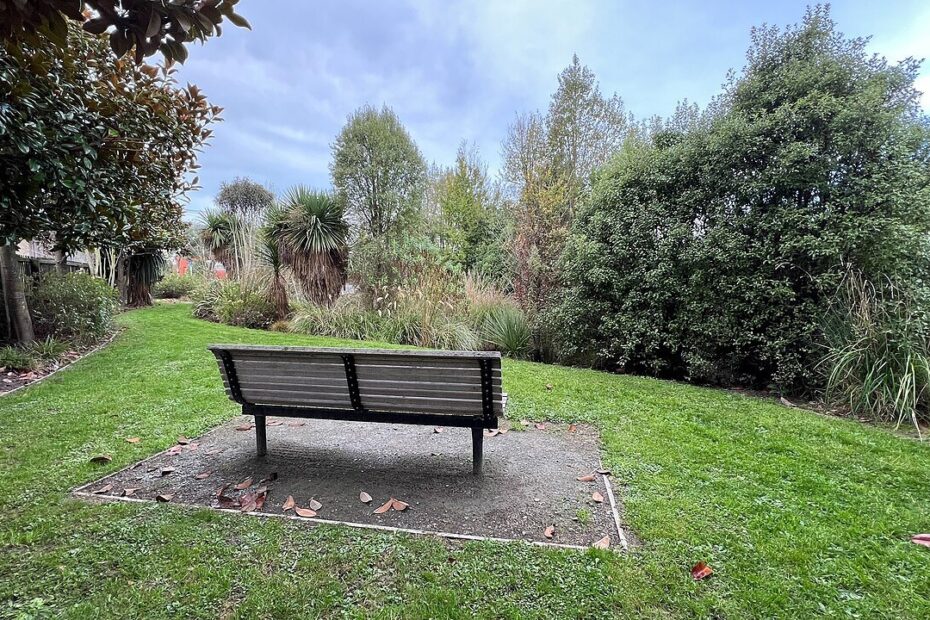
Image: Withers Family Park quiet bench 02 by David Palmer / Wikimedia Commons. CC BY-SA 4.0. Resized and compressed.
